When discussing TENS and EMS electrodes, attention often focuses on conductive gel, backing materials, snap connectors, or adhesive strength. However, electrode placement and physical contact with the skin are also important factors in the overall stimulation experience.
For manufacturers of physiotherapy electrodes, this means electrode design should consider not only electrical conductivity, but also how consistently the electrode can be positioned and maintained on the skin during use.
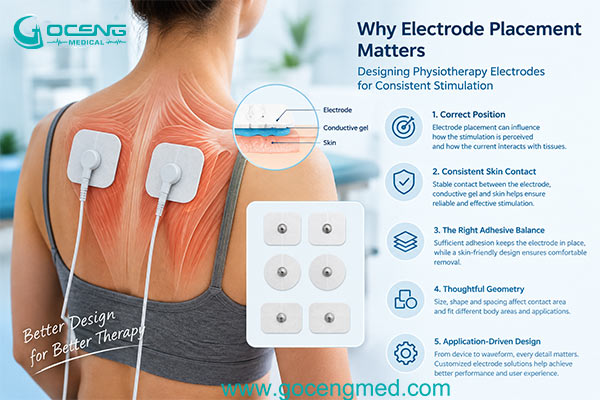
1. Electrode position can affect stimulation
TENS electrodes deliver electrical stimulation through the skin to targeted areas. The location of the electrodes can influence how the stimulation is perceived and how the current interacts with the underlying tissues.
Clinical literature has reported that electrode placement is an important consideration in TENS application, while research has also observed differences in physiological responses depending on the stimulation site.
For this reason, electrode size, shape, and spacing should be considered together with the intended application.
2. Consistent skin contact is essential
An electrode should maintain stable contact with the skin across its entire conductive area.
If part of the electrode lifts during movement, the effective contact area can change. For physiotherapy applications, this may result in an inconsistent user experience and localized discomfort.
Properly securing the electrode helps maintain contact between the electrode, conductive medium, and skin. Clinical guidance for electrical stimulation also emphasizes maintaining firm contact across the electrode area.
This is particularly important for electrodes used during exercise, rehabilitation, or other situations where the skin is moving continuously.
3. The adhesive system needs to balance two requirements
A physiotherapy electrode needs sufficient adhesion to remain securely attached during treatment.
At the same time, excessive adhesion can make removal uncomfortable, especially when electrodes are used repeatedly or on sensitive skin.
Therefore, electrode manufacturers need to consider:
- Adhesive strength
- Skin compatibility
- Flexibility of the backing material
- Conformability to body contours
- Resistance to lifting during movement
- Ease of removal
The best construction depends on the intended application, treatment duration, electrode size, and target body area.
4. Electrode geometry is more than appearance
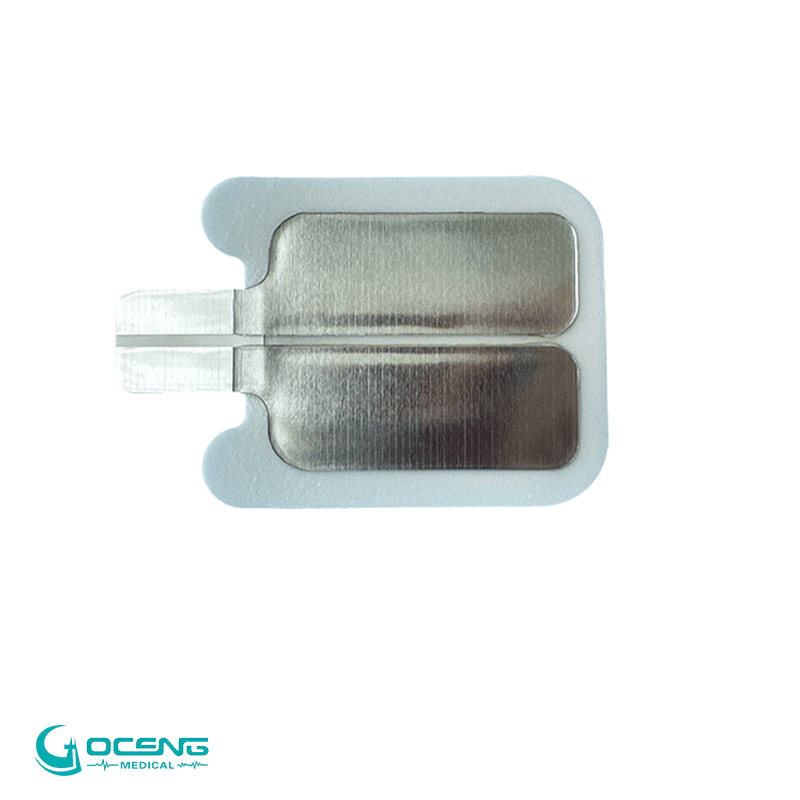
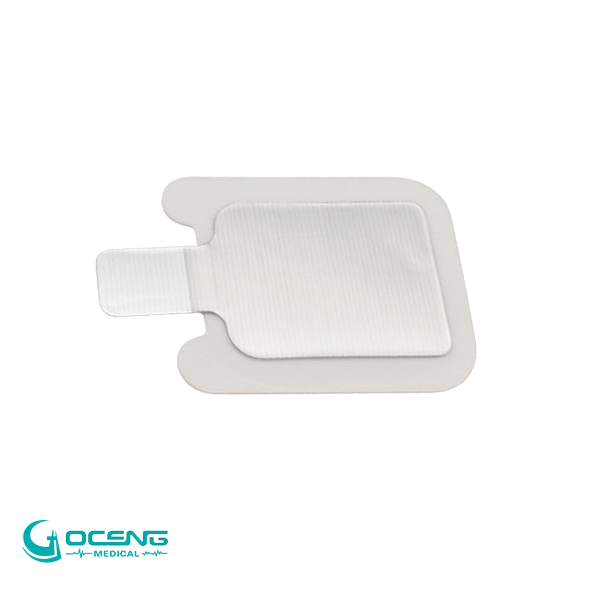
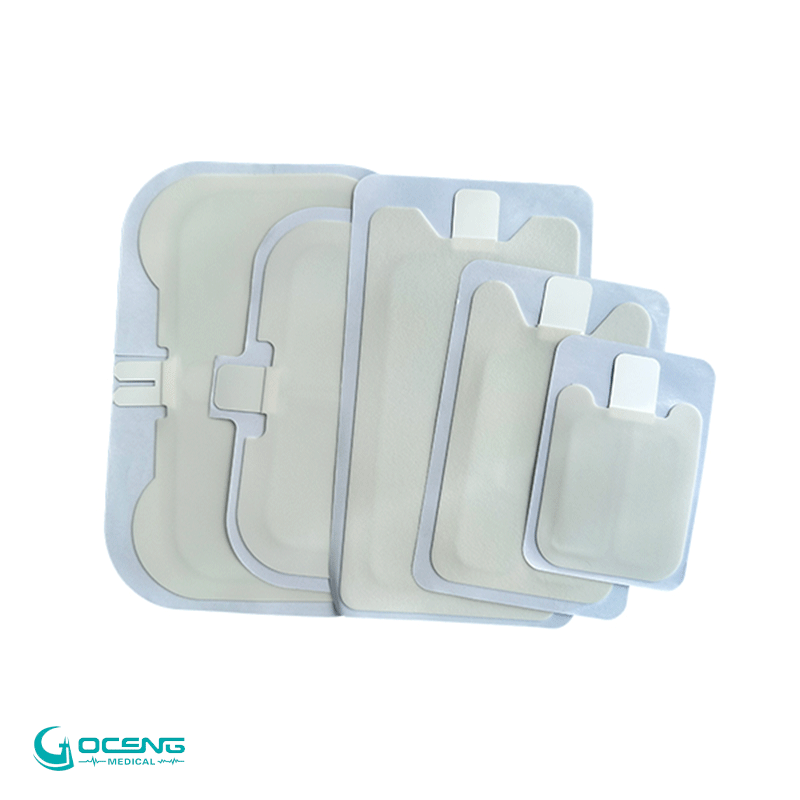
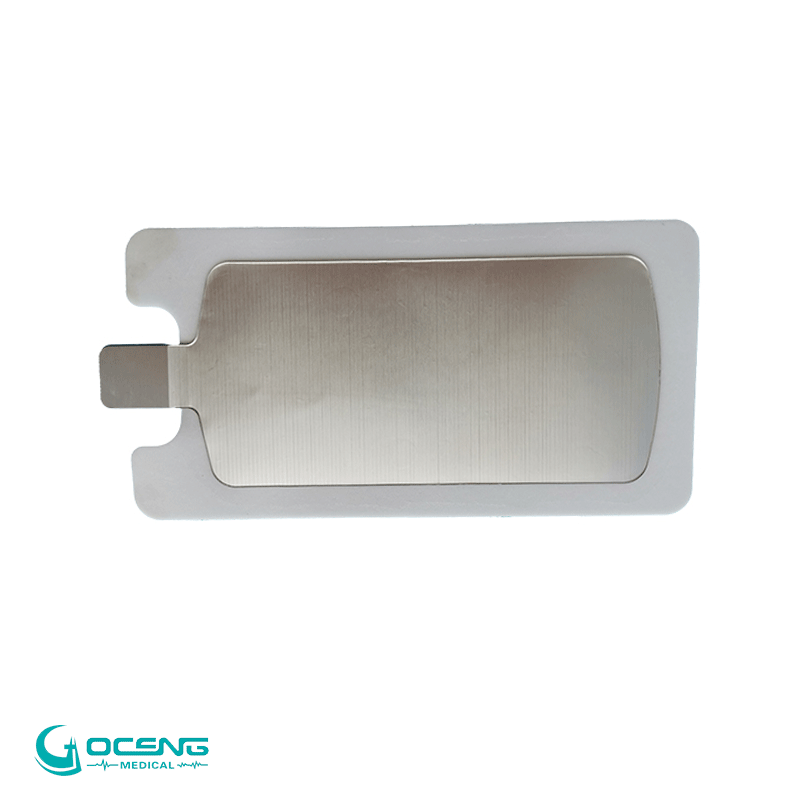
A round, square, rectangular, or custom-shaped electrode can provide a different contact area and fit different anatomical locations.
For example, a smaller electrode may be useful where space is limited, while a larger electrode can provide a broader contact area for certain applications.
Electrode spacing is also important when multiple electrodes are used together. The distance between electrodes should be considered during product development rather than treated as an afterthought.
Recent research on electrical stimulation continues to examine how electrode dimensions and the electrode–skin interface affect stimulation characteristics.
5. Good electrode design starts with the application
There is no single electrode design that is suitable for every physiotherapy device.
A well-designed electrode should be developed around the complete application:
Device → waveform → electrode construction → skin contact → intended body area → user movement
This is why customized electrode development can be valuable for TENS and EMS device manufacturers.
At Goceng Medical, we support OEM and customized physiotherapy electrodes with different sizes, shapes, backing materials, conductive gel constructions, and connector options.From standard rectangular electrodes to compact or irregular-shaped designs, we can work with customers to develop electrode constructions according to their device and application requirements.
Choosing the right electrode is not only about conductivity. It is about creating a stable interface between the device and the user's skin.