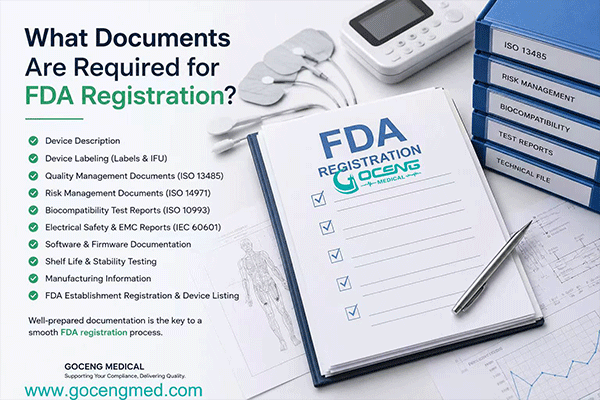
For many medical device companies entering the U.S. market, FDA registration is one of the most important steps before commercial launch. However, many buyers and OEM partners are often unsure about what documents are actually required during the FDA registration process.
At Goceng Medical, we frequently support customers in preparing technical and manufacturing documents for medical electrode and physiotherapy device projects. Below is a general overview of the common documents required for FDA registration of medical devices.
1. Device Description
A clear product description is essential.
This document usually includes:
- Product name and model
- Intended use
- Product structure and components
- Technical specifications
- Accessories and configuration
- Operating principles
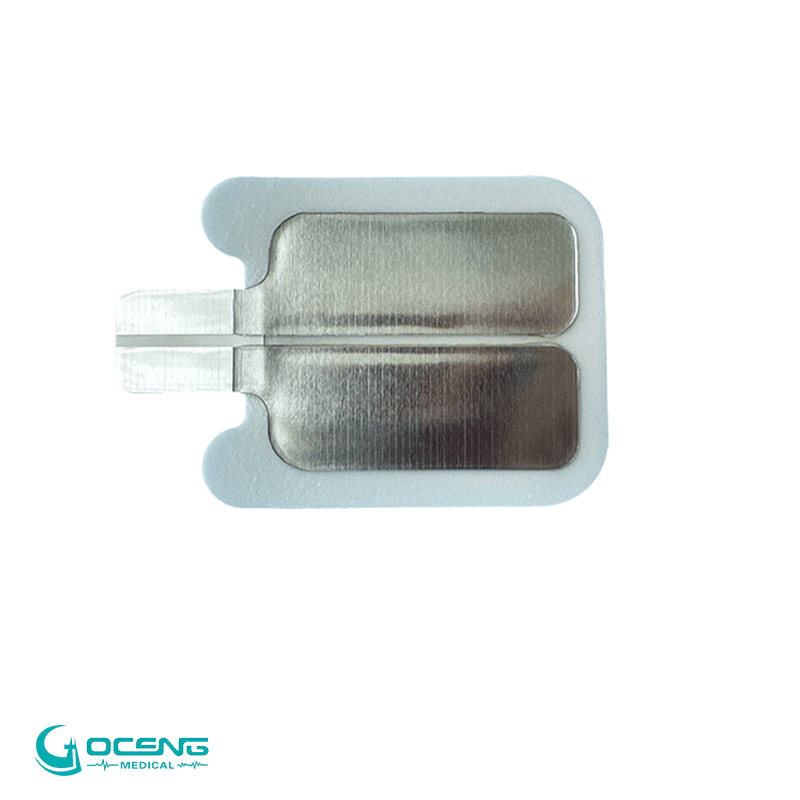
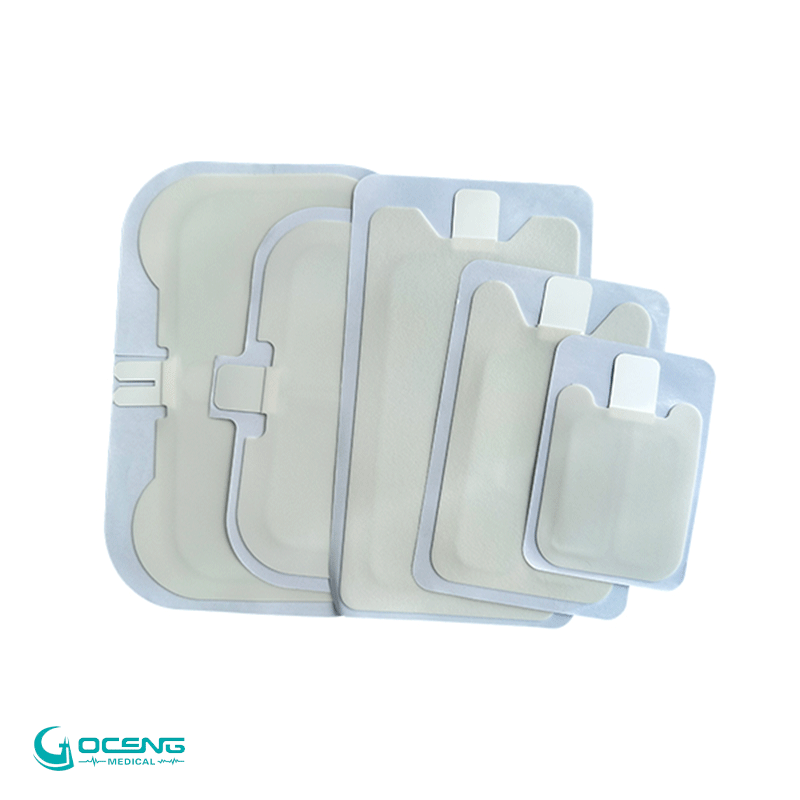
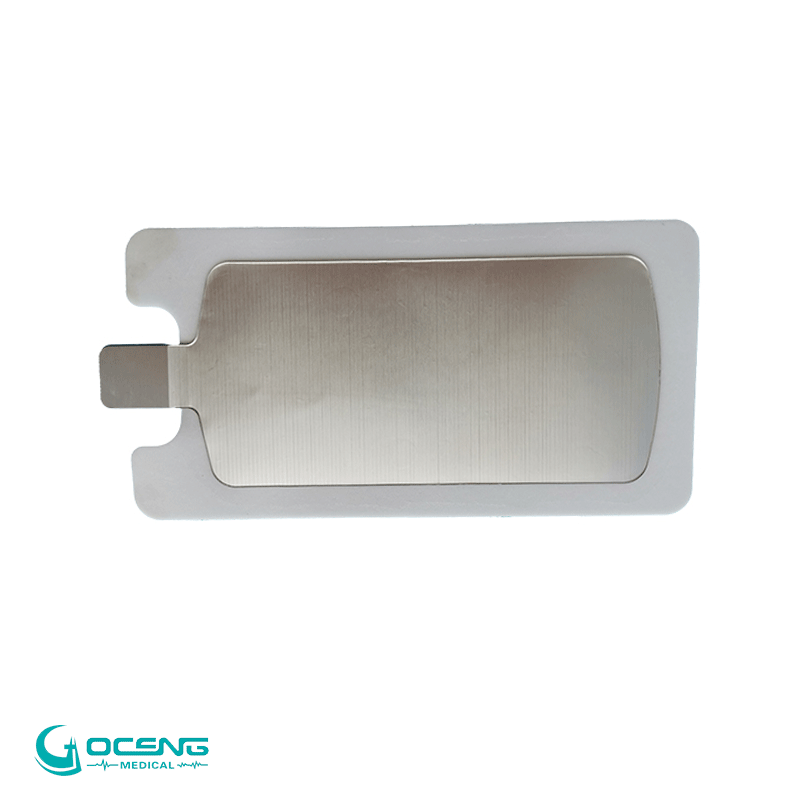
For products such as TENS electrodes, ECG electrodes, EMS pads, or wearable monitoring accessories, FDA reviewers need to clearly understand how the product functions and how it is used.
2. Device Labeling
FDA requires product labeling information, including:
- Product labels
- Packaging labels
- IFU (Instructions for Use)
- Warning statements
- Symbols and markings
The labeling must accurately reflect the intended use and comply with applicable FDA requirements.
For medical electrode products, labeling often includes:
- Single-use or reusable indication
- Contraindications
- Skin preparation instructions
- Storage conditions
- Expiration date
- Manufacturer information
3. ISO 13485 and Quality Management Documents
Although ISO 13485 certification itself is not mandatory for FDA registration, having a compliant quality management system is highly important for medical device manufacturing.
Common supporting documents may include:
- ISO 13485 certificate
- Quality procedures
- Manufacturing process control
- Traceability records
- CAPA procedures
- Supplier management procedures
A well-established quality system helps demonstrate manufacturing consistency and product reliability.
4. Risk Management Documents
Risk management is a critical part of medical device compliance.
Typical documentation may include:
- Risk analysis
- Hazard identification
- Risk control measures
- Residual risk evaluation
Many manufacturers prepare these documents according to ISO 14971 standards.
For electrode products, common risks may involve:
- Skin irritation
- Adhesion failure
- Electrical safety
- Overheating during stimulation
5. Biocompatibility Test Reports
For products contacting human skin, FDA often requires biocompatibility evaluation.
Common tests may include:
- Cytotoxicity
- Skin irritation
- Sensitization
These tests are commonly performed according to ISO 10993 standards.
For hydrogel electrodes and wearable sensors, biocompatibility is especially important due to prolonged skin contact.
6. Electrical Safety and EMC Reports
For electronic medical devices, FDA may require safety testing reports such as:
- IEC 60601-1
- EMC testing
- Electrical safety evaluation
This is particularly important for:
- TENS devices
- EMS stimulators
- ECG monitoring systems
- Wearable medical electronics
7. Software and Firmware Documentation
For devices containing software or embedded systems, additional documentation may be required, including:
- Software description
- Software architecture
- Firmware version control
- Cybersecurity information
- Source code-related documents (when applicable)
As wearable and smart medical devices continue to grow rapidly, software documentation has become increasingly important during regulatory review.
8. Shelf Life and Stability Testing
FDA may also require evidence showing that the product remains stable during its intended shelf life.
Typical supporting documents include:
- Accelerated aging reports
- Real-time aging reports
- Packaging validation
- Seal integrity testing
For hydrogel electrodes, stability testing is especially important to evaluate:
- Adhesion performance
- Moisture retention
- Conductivity stability
9. Manufacturing Information
Manufacturing-related documentation may include:
- Manufacturing flowcharts
- Cleanroom information
- Process validation
- Incoming quality control
- Final inspection procedures
These documents help demonstrate product consistency and manufacturing capability.
10. FDA Establishment Registration and Device Listing
After preparing the necessary technical documentation, manufacturers or specification developers may also need to complete:
- FDA Establishment Registration
- Device Listing
Depending on the product classification, some devices may also require:
- 510(k) submission
- Predicate comparison
- Additional regulatory review
FDA registration is not simply about submitting a few forms. It is a comprehensive process involving product safety, quality systems, risk management, testing, and technical documentation.
For OEM and ODM medical device projects, early preparation of regulatory documents can significantly improve communication efficiency and help reduce delays during product registration.
At Goceng Medical, we support customers worldwide with OEM and ODM manufacturing for medical electrodes, hydrogel products, and physiotherapy accessories, including assistance with technical documentation preparation for compliance projects.
If you are developing a medical electrode or wearable medical device project, feel free to contact our team for further discussion.