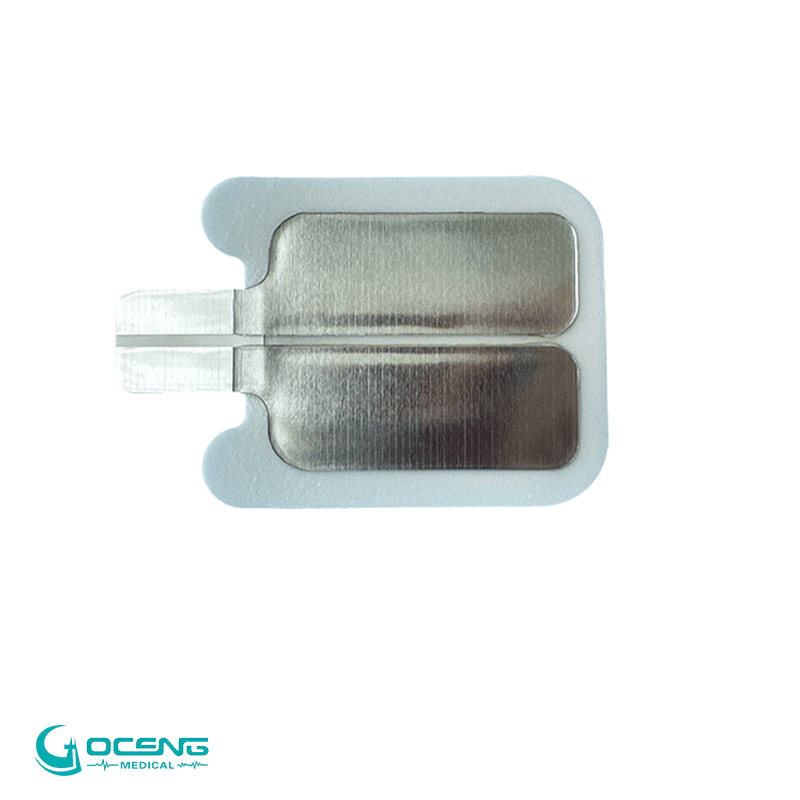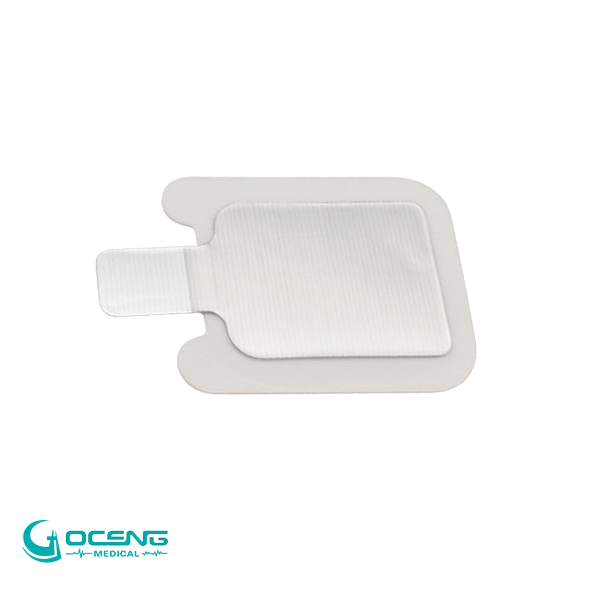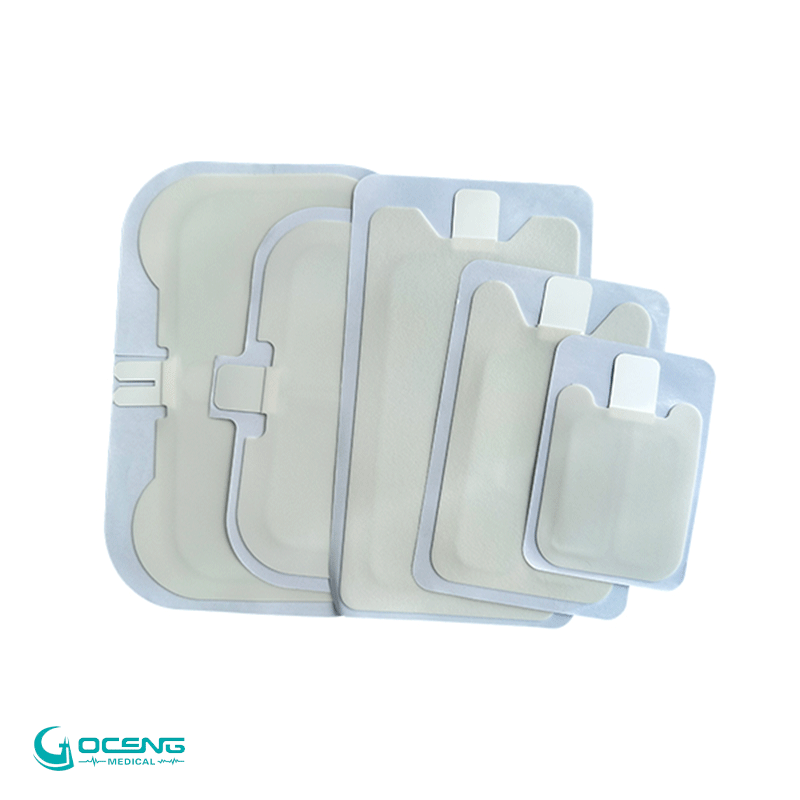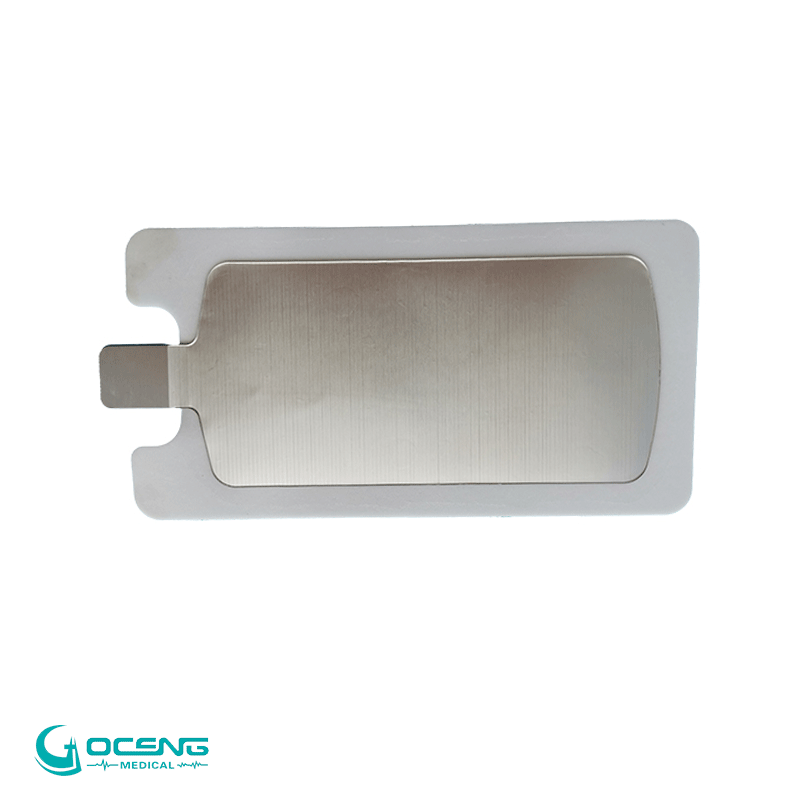
When selecting electrode pads for TENS, EMS, physiotherapy, or other electrical stimulation applications, the conductive material is an important factor to consider. Two commonly used options are silver-based electrode pads and carbon electrode pads.
Although both can be designed to deliver electrical stimulation effectively, their material properties, manufacturing processes, cost, and application requirements can be different.
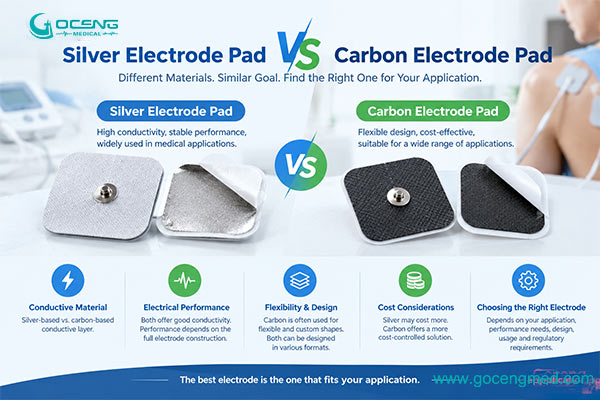
1. Conductive Material
The most obvious difference is the conductive layer.
Silver electrode pads use a silver-based conductive material or silver-containing conductive layer. Silver has excellent electrical conductivity and is widely used in medical and electronic applications where stable electrical performance is required.
Carbon electrode pads use carbon-based conductive materials, such as carbon ink or a carbon conductive layer. Carbon is also electrically conductive and can be incorporated into flexible electrode constructions at a relatively controlled cost.
The actual performance of an electrode, however, depends not only on the conductive material but also on the hydrogel, backing material, electrode structure, contact area, and manufacturing process.
2. Electrical Performance
Silver has very high electrical conductivity, which can provide a highly conductive pathway within the electrode structure.
Carbon conductive layers can also provide stable electrical conductivity and are widely used in disposable and reusable stimulation electrodes.
For TENS and EMS applications, the overall electrode performance should therefore be evaluated through factors such as:
- Electrical resistance or impedance
- Current distribution
- Contact quality with the skin
- Adhesive performance
- Hydrogel conductivity
- Electrode size and shape
- Performance during repeated use
A well-designed carbon electrode can perform effectively in many stimulation applications, while silver-based constructions may be selected when specific electrical or material requirements call for them.
3. Flexibility and Electrode Design
Carbon conductive layers are commonly applied to flexible substrates, making them suitable for electrodes with different shapes and sizes.
This can be particularly useful for custom electrodes, where the electrode needs to follow specific anatomical areas or fit a particular device design.
Silver-based constructions can also be designed in flexible formats, but the appropriate construction depends on the intended application, manufacturing process, and required performance.
For custom projects, the conductive layer should be considered together with the backing material, hydrogel thickness, snap or connector type, and overall electrode geometry.
4. Cost Considerations
Material cost is another important difference.
Silver is a higher-value conductive material, so silver-based electrode constructions can have a higher material cost depending on the formulation and amount of silver used.
Carbon-based conductive materials can offer a more cost-controlled solution for applications where their electrical performance meets the product requirements.
For large-volume TENS and EMS electrode production, material selection should therefore be evaluated together with the target unit cost, expected service life, performance requirements, and production volume.
5. Choosing the Right Electrode
There is no single conductive material that is suitable for every electrode application.
The choice between a silver-based and carbon-based electrode should be based on the complete product specification, including:
Application: TENS, EMS, physiotherapy, rehabilitation, or another electrical stimulation application.
Electrical requirements: Required impedance, conductivity, current distribution, and device output.
Electrode construction: Backing material, conductive layer, hydrogel, connector, and adhesive system.
Usage requirements: Disposable or reusable use, expected number of applications, and storage conditions.
Product design: Standard rectangular or round electrodes, or customized irregular shapes.
Regulatory requirements: Applicable testing, documentation, and market-specific regulatory requirements.
Silver or Carbon: Start with the Application
The conductive material is only one part of a medical electrode. The final performance is determined by how the conductive layer, hydrogel, backing, connector, and manufacturing process work together.
For this reason, material selection should ideally be discussed at the prototype stage rather than after the electrode design has already been finalized.
At Goceng Medical, we support customized electrode development for TENS, EMS, physiotherapy, and other applications. Customers can discuss electrode dimensions, shape, backing material, conductive construction, hydrogel, connector type, and packaging requirements with our team before moving to mass production.
Need a custom electrode for your device? Contact Goceng Medical to discuss your specifications and prototype requirements.