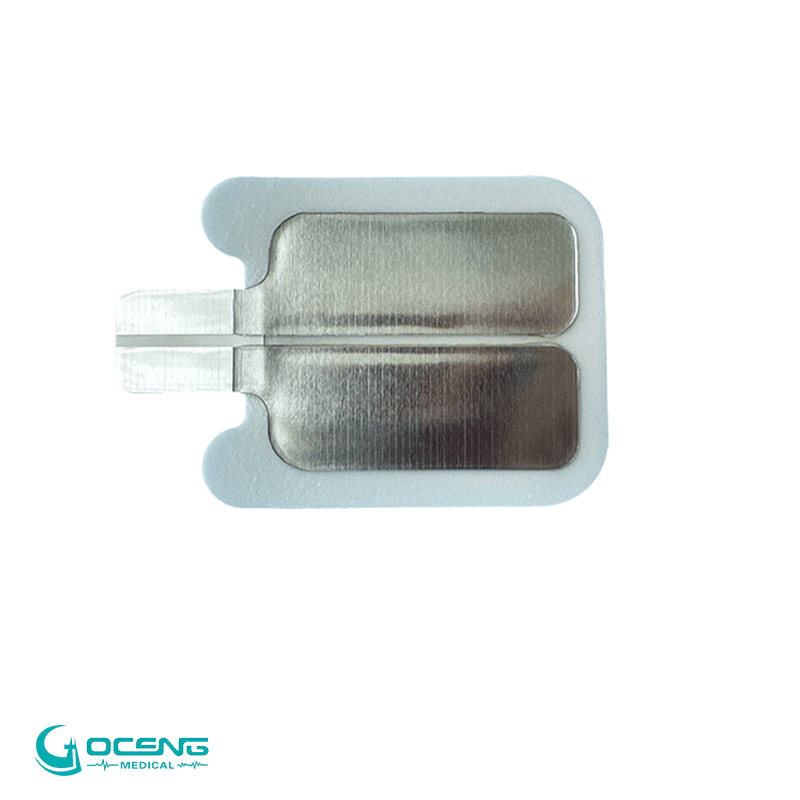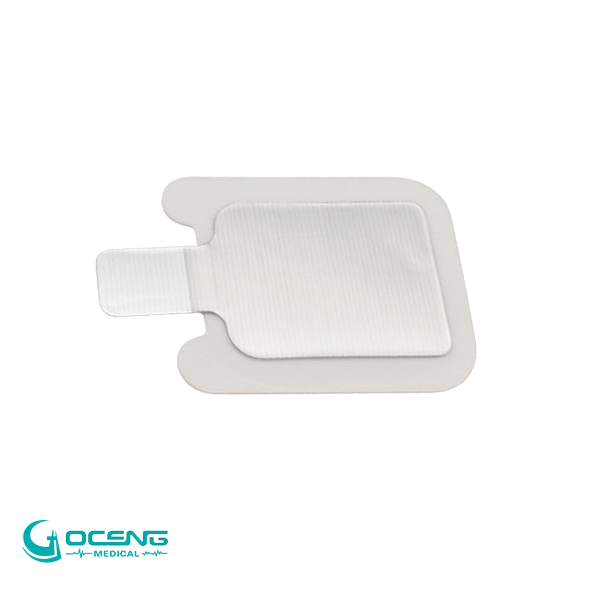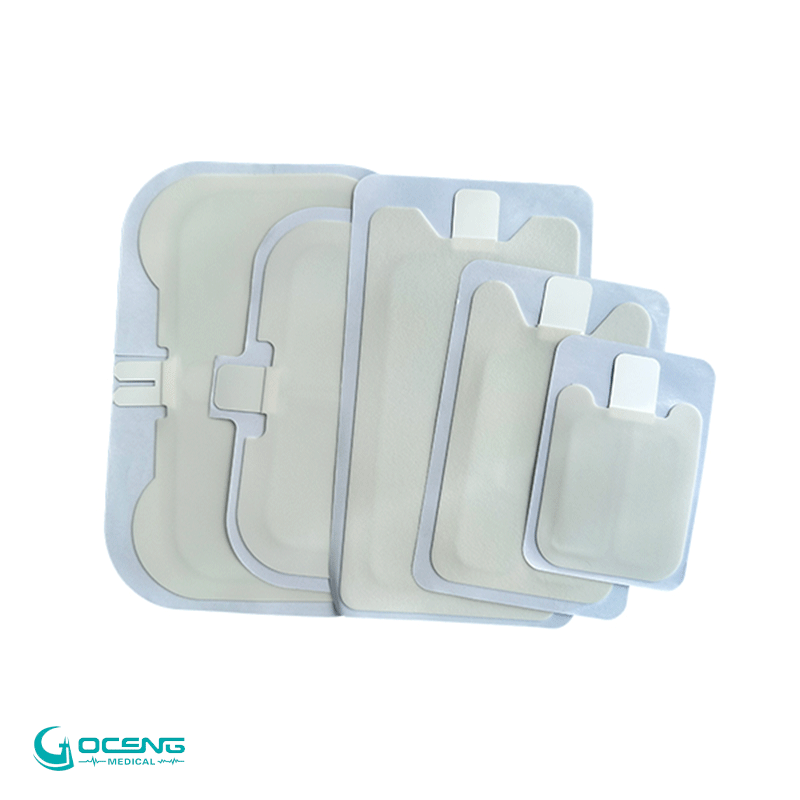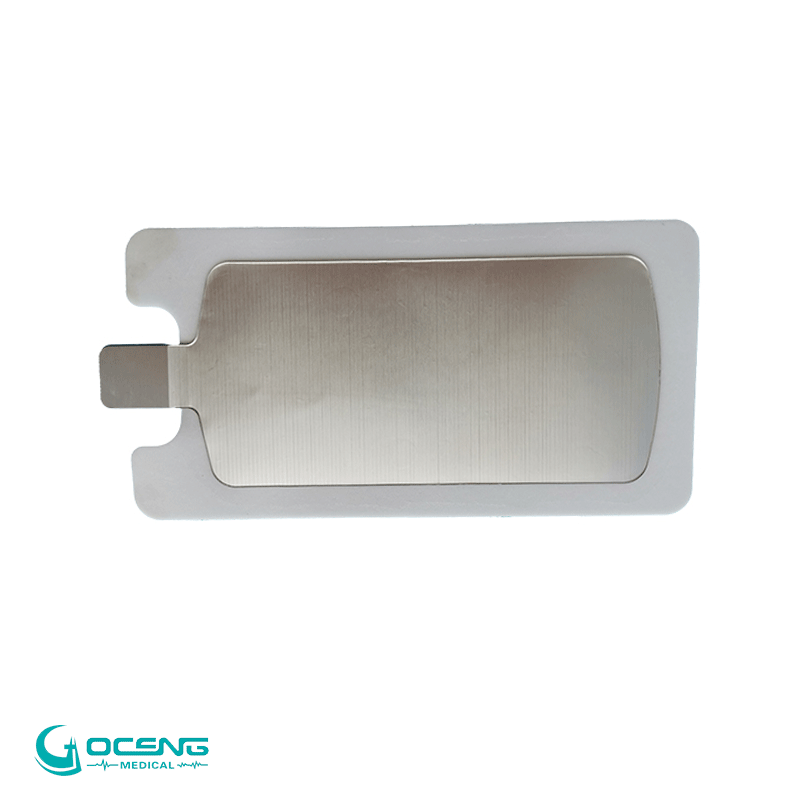
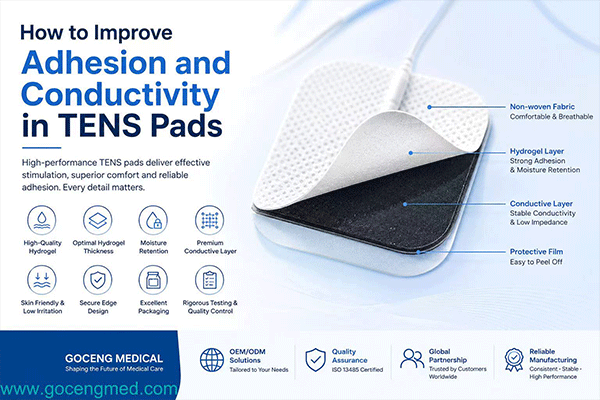
TENS electrodes play a critical role in electrotherapy performance. Stable adhesion and reliable conductivity directly affect stimulation efficiency, user comfort, and overall product quality. Poor adhesion may cause the electrode to lift during treatment, while unstable conductivity can result in uneven stimulation or skin discomfort.
At Goceng Medical, we continuously work with OEM and ODM customers to improve hydrogel performance for TENS, EMS, and physiotherapy electrodes. Below are several key factors that help improve both adhesion and conductivity in TENS electrodes.
1. Select the Appropriate Hydrogel Formula
The hydrogel is the core component of a TENS electrode.
A well-balanced hydrogel should provide:
- Stable skin adhesion
- Good electrical conductivity
- Comfortable skin contact
- Easy peel-off performance
- Low skin irritation risk
Different applications require different gel characteristics. For example:
- Home-use TENS products may require softer adhesion for comfort
- Sports EMS products may require stronger adhesion during movement
- Long-term wearable devices may require enhanced moisture retention
Hydrogel formulation directly affects product stability and reusability.
2. Control Hydrogel Thickness
Hydrogel thickness significantly impacts both adhesion and electrical performance.
A hydrogel layer that is too thin may cause:
- Weak adhesion
- Faster drying
- Reduced conductivity
A layer that is too thick may result in:
- Poor structural stability
- Gel overflow
- Difficult handling during production
For many reusable TENS pads, hydrogel thickness is commonly controlled between 0.8 mm and 1.2 mm depending on product design and intended use.
3. Improve Moisture Retention
Moisture retention is essential for maintaining conductivity over repeated use.
When hydrogel loses moisture:
- Conductivity decreases
- Skin adhesion weakens
- Stimulation becomes unstable
Common methods to improve moisture retention include:
- Optimizing humectant content
- Using higher-quality raw materials
- Improving packaging sealing performance
- Reducing air exposure during production
Proper storage conditions are also important to maintain hydrogel stability during shelf life.
4. Optimize Conductive Materials
The conductive layer inside the electrode also affects overall performance.
Common conductive materials include:
- Carbon film
- Ag/AgCl film
- Conductive fabric
- Metal snap connectors
Different conductive materials are suitable for different stimulation intensities and applications.
For example:
- Carbon film is often preferred for higher stimulation stability
- Ag/AgCl may provide lower impedance and more precise signal transmission
Selecting the correct conductive structure helps improve stimulation consistency and reduce hot spots.
5. Improve Skin Contact Surface Design
Electrode structure design can improve contact stability during use.
Important design considerations include:
- Rounded corners to reduce lifting
- Flexible backing materials
- Proper edge sealing
- Even gel coating distribution
Pads designed for sports or wearable applications often require enhanced flexibility and stronger edge adhesion.
6. Reduce Skin Irritation Risks
Excessively aggressive adhesion may increase skin discomfort.
To improve user experience:
- Use skin-friendly hydrogel materials
- Avoid excessive adhesive strength
- Improve breathability
- Perform biocompatibility testing according to ISO 10993
Balanced adhesion is often more important than simply increasing stickiness.
7. Improve Packaging Quality
Packaging has a direct impact on hydrogel performance and product shelf life.
Poor packaging may lead to:
- Moisture loss
- Oxidation
- Reduced adhesion
- Conductivity instability
High-barrier aluminum foil packaging is commonly used to improve long-term hydrogel stability.
Seal integrity testing is also important during production validation.
8. Perform Stability and Aging Tests
Long-term product testing helps evaluate real product performance over time.
Common evaluations include:
- Adhesion testing
- Conductivity testing
- Repeated peel-and-stick cycles
- Accelerated aging tests
- Real-time shelf-life studies
These tests help manufacturers improve product consistency and reliability before mass production.
Improving adhesion and conductivity in TENS electrodes is not determined by a single factor. Hydrogel formulation, conductive materials, structural design, moisture retention, and packaging all work together to influence final product performance.
As the global physiotherapy and wearable medical device market continues to grow, customers increasingly expect electrodes with:
- Better comfort
- Longer reusability
- Stable conductivity
- Lower skin irritation risk
At Goceng Medical, we support OEM and ODM projects for TENS electrodes, EMS pads, ECG electrodes, and medical hydrogel solutions for global customers.
If you are developing a new electrode project or looking to improve existing product performance, feel free to contact our team for further discussion.